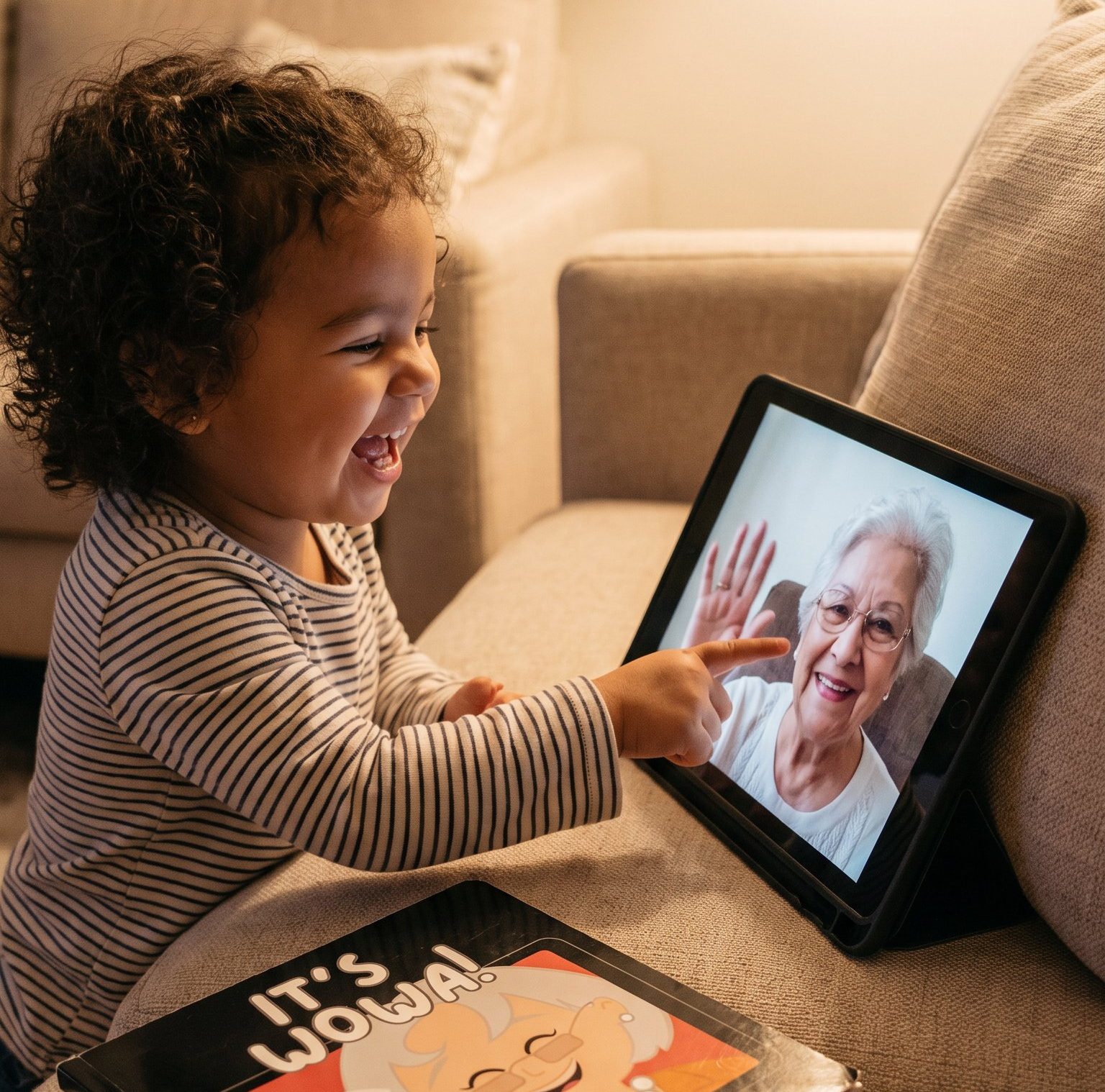
Short answer: To stay connected with grandchildren who live far away, build small, predictable routines: scheduled video calls, shared stories or books, handwritten mail, and photo or voice-message exchanges. Consistency matters more than length. Ten happy minutes every week beats one long call every month.

Why does staying connected across distance matter?
Children build trust through repetition. When a grandparent’s face and voice show up regularly, even through a screen, the child learns that this person is safe, loving, and part of the family. For grandparents, regular contact keeps you included in daily life instead of hearing about milestones after the fact.
What are the best ways to stay connected with grandchildren from far away?
- Schedule a regular video call. Pick a day and time that fits the child’s routine, such as before dinner or after a nap. Predictability helps parents say yes and helps children look forward to it.
- Send real mail. Kids love getting something with their name on it. Try postcards, stickers, drawings, or a short note. Even a toddler who can’t read will enjoy opening an envelope.
- Read together. Choose a book made for video calls, like It’s Wowa (ages 2 to 4), mail a copy to the child, and read the same one on your calls. See our guide to picture books for toddlers and long-distance grandparents.
- Use voice and video messages. Apps like WhatsApp, Marco Polo, or Facebook Messenger let you send a quick message the child can replay when it suits the family.
- Share photos and small moments. Send a picture of your garden, your pet, or your lunch. Ordinary moments make you feel present.
- Create shared rituals. A goodnight song, a silly handshake, or a recurring game becomes “our thing” and is easy to repeat every call.
- Visit when you can, and plan it. Mark upcoming visits on a calendar the child can see. Counting down builds excitement and makes the distance feel temporary.
How can you connect with a toddler who won’t sit still on video?
Keep calls short, usually 5 to 10 minutes, and make them active rather than conversational. Toddlers connect through play, not small talk. Sing, use puppets, or play peekaboo. For specific ideas, read our list of 5 interactive activities to try with toddlers over video calls.
How do you stay close to older grandchildren?
School-age children and teens respond to shared interests. Play an online game, trade jokes, ask about a favorite show, or send a short text with no pressure to reply. Let them set the pace, and avoid making them feel interrogated.
How can you work well with the child’s parents?
Parents are the gatekeepers of your schedule, so make it easy for them. Offer a few call times, don’t take a missed call personally, and ask what would help. When parents feel supported rather than pressured, they’ll make more space for you.
What if you’re not comfortable with technology?
Start with one app and one device. Ask a family member to set up a shortcut on your home screen, and practice a test call. Most video apps work the same way: tap the contact, then tap the camera icon.
Frequently Asked Questions
How often should I call my grandchildren who live far away?
Once a week is a good target for young children. Older kids may prefer every other week or flexible check-ins. Match the family’s routine, and aim for consistency over frequency.
What should I talk about with a young grandchild on a video call?
Talk about what they can see and do: toys, pets, snacks, songs, and silly faces. Short questions like “Show me your favorite car” work better than open-ended ones.
What’s the best app for grandparents to video call grandchildren?
FaceTime, WhatsApp, Google Meet, and Zoom all work well. Pick whichever the parents already use so calls are simple to start.
How do I stay close to my grandchildren if I rarely see them in person?
Combine regular calls, mail, shared books, and planned visits. Small, repeated contact builds a strong bond over time.